Slippery fiberglass pool steps can result from a film on the surface, worn texture or an unsuitable repair finish. The right response depends on which problem is present. Restrict access to the affected steps while checking them; a surface that looks clean can still be slippery under wet feet.
Check whether the change is recent
Think about when the steps became slippery. A gradual change may relate to a buildup of oils, dirt or biological growth. A change immediately after a repair deserves a check of the material applied and its curing requirements.
Compare the affected tread with nearby original surfaces without testing it by walking barefoot on a known slippery area. Note whether a molded pattern is still visible and whether the change follows the boundary of a repair. Photos and maintenance records help a service provider understand the sequence.

Remove buildup with a suitable method
Use a brush and cleaning product approved for the pool finish. Steps, benches and corners often need direct attention even when an automatic cleaner keeps the floor looking good. Watch the cleaner from the poolside to see whether it actually reaches the horizontal treads.
If biological growth is suspected, check the water treatment and circulation as well as cleaning the surface. Follow the pool and treatment equipment instructions. Brushing without correcting the water conditions may give only temporary improvement, while increasing chemicals without identifying the cause can damage the finish.
Reassess after cleaning
If the steps remain slippery after suitable cleaning and water treatment, arrange an inspection of the finish and texture. A worn or incorrectly refinished tread needs a different solution from a dirty one. Ask whether the existing surface is sound and what compatible repair would restore a suitable walking surface.
Do not sand the steps, etch them with acid or apply ordinary paint to create grip. Adhesive strips and mats also need specific approval for the submerged surface and must not create loose edges or interfere with fittings. A quick modification can introduce another hazard.

Check the entry as a whole
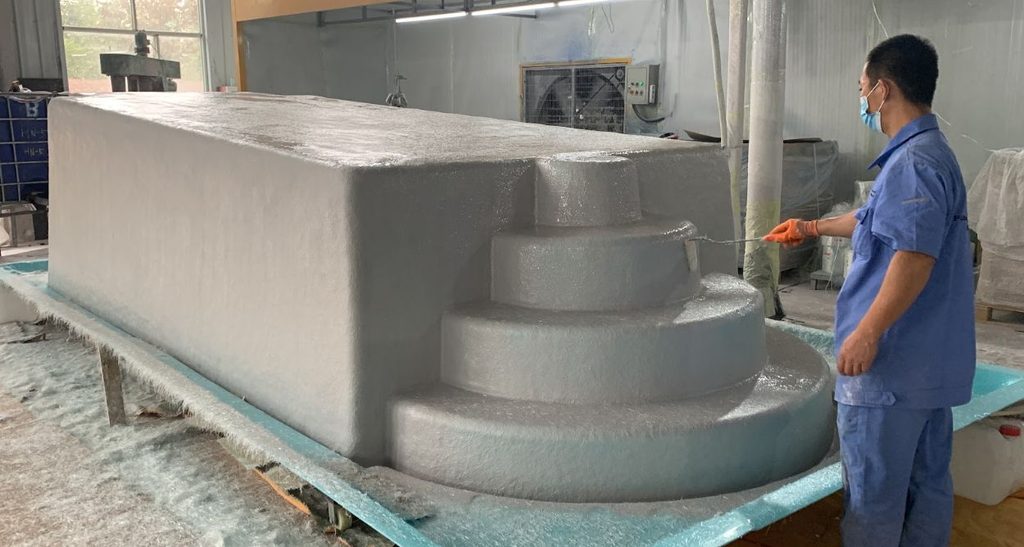
Good entry design includes enough room for a foot, usable hand support where required and lighting that makes changes in level visible. Keep the route to the steps clear. A new finish cannot correct a tread that is too narrow for the intended users.
For prevention, include steps and benches in the regular cleaning routine, check circulation and keep water-treatment records. After any repair, confirm the cure, intended texture and return-to-use instructions with the provider before reopening the entry.
Kaixin Pools can help you compare entry layouts when choosing a new fiberglass pool. Send the intended users and site plan so we can discuss step positions and model dimensions. For an existing slippery entry, start with cleaning and a local assessment of its condition.