The right pool heat pump must do two jobs: replace heat the pool loses and raise the water temperature within your preferred time. Pool volume helps calculate the energy needed for warming up. Surface area, weather and cover use help determine ongoing heat loss. A label such as “suitable for pools up to 30 cubic meters” is only useful when its assumed conditions match your project.
Water volume determines the energy for a temperature rise
More water requires more heat for the same increase in temperature. A useful estimate is 1.163 kWh of heat for each cubic meter of water raised by 1°C. This is heat delivered to the water, not electricity consumed by the heat pump.
For example, warming 12 cubic meters by 6°C requires about 83.7 kWh before allowing for heat loss. If that rise must happen in 12 hours, the average heat retained by the water must be about 7 kW. The unit needs to deliver more than that because the pool also loses heat during the warming period. These figures illustrate the method; they are not a recommendation to buy a 7 kW unit.
Surface area helps explain the ongoing demand
An open water surface exchanges heat with the surrounding air. Evaporation, wind and the difference between water and air temperature influence that loss. Two pools with the same volume but different surface areas can therefore have different maintenance-heating needs.
A cover changes this calculation by limiting evaporation while it is in place. Sizing on the assumption that a cover is used every night may produce disappointing results if the pool is actually left open. For an exposed above-ground pool, heat losses through the structure also belong in the assessment.

The coldest planned month matters more than summer weather
A unit that comfortably maintains temperature in warm weather may struggle in a cool shoulder season. Air-source heat-pump output and efficiency vary with air temperature, humidity and water temperature. Some units also spend time defrosting in suitable cold conditions.
The relevant specification is the unit’s performance near your intended operating conditions. A large number measured in warm air does not show what the same machine will deliver on a cool evening. Model-specific performance tables are more useful than comparing model names or maximum advertised pool volumes. [10]
Heating hours change the required capacity
A pool that can heat gradually over a long period needs less recovery capacity than one that must warm quickly before a short visit. Limits on equipment operating hours can make this difference larger.
Using the earlier example, spreading the 83.7 kWh warming requirement across 24 hours reduces the required retained heating rate to about 3.5 kW, before losses. Shortening it to 6 hours raises that figure to about 14 kW. The water volume is unchanged; the expected readiness time changes the required output.

Bigger equipment is not automatically a complete solution
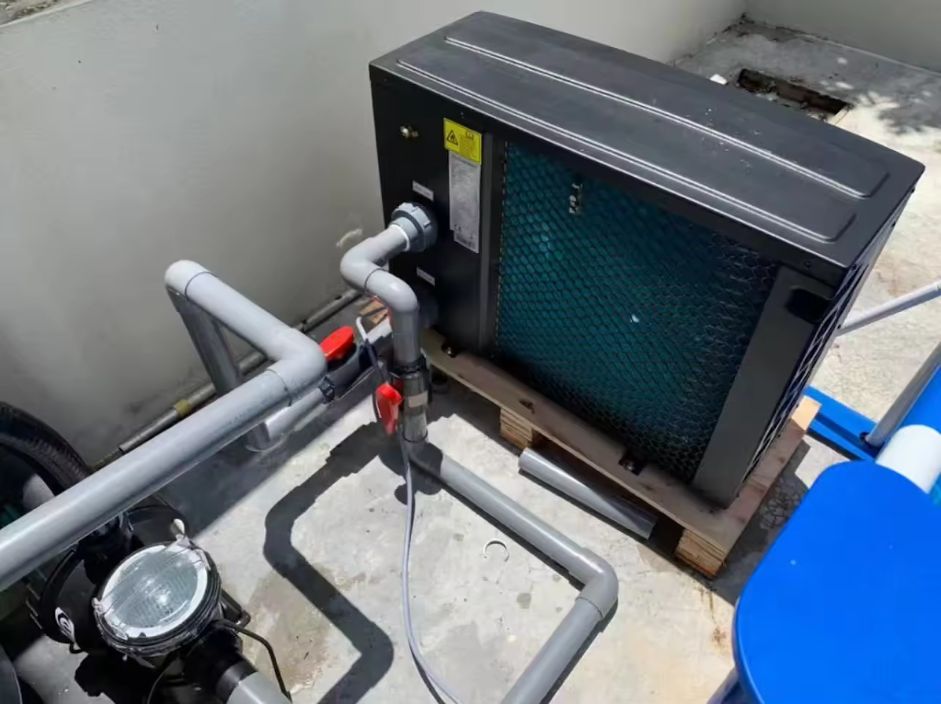
More capacity can reduce recovery time, but the unit still needs compatible water flow, electrical supply, controls and airflow. A heat pump enclosed in an unsuitable equipment box may not perform as intended. Physical space and manufacturer clearances also affect which model can be installed.
For a useful selection, provide the pool’s water volume and surface area, location, target temperature, intended months of use, cover routine and acceptable heating time. The equipment supplier can then use actual performance data and a site-based heat-loss estimate rather than a single size chart.
Prepare the heating specification with Kaixin
Kaixin Pools can help organize these requirements alongside your pool design and discuss compatible equipment options. Share your climate and swimming schedule so the proposed heating arrangement reflects how you plan to use the pool.