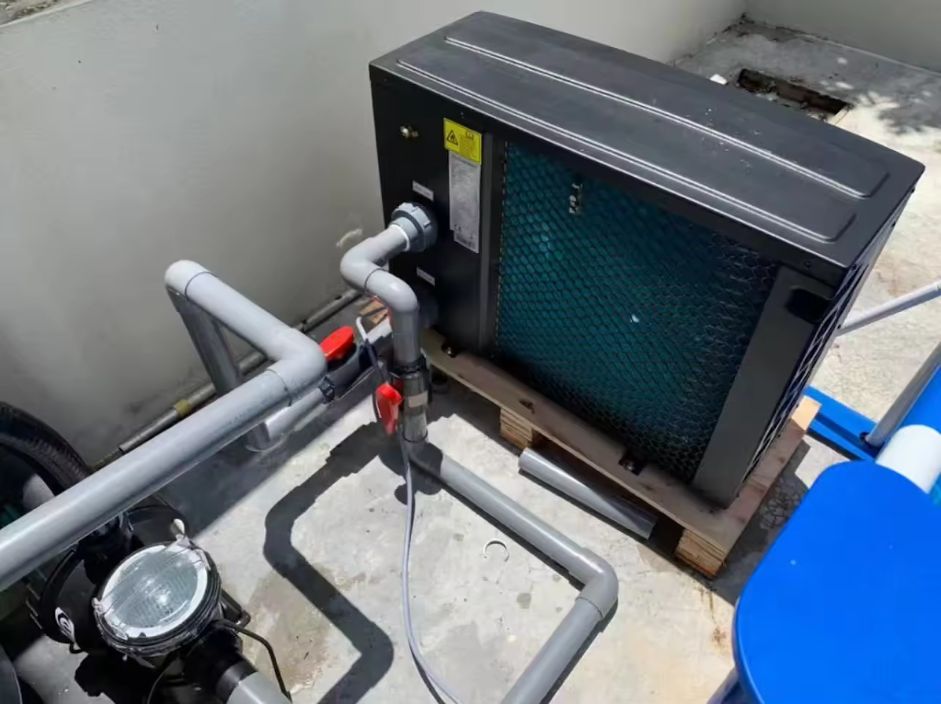

A pool heat pump often suits regular temperature maintenance in a suitable climate. A gas heater often suits faster heating for occasional use, especially when a high heat output is needed. The cheaper option depends on local energy prices, equipment efficiency and how you use the pool. Neither technology is always the best choice, and heating speed should be compared using useful heat delivered to the water.
They obtain heat in different ways
An air-source heat pump uses electricity to move heat from outdoor air into the pool water. It is different from an electric resistance heater, which creates heat directly with an element. A gas heater burns natural gas or propane and transfers part of that energy to the water through a heat exchanger.[8]
Heat-pump performance changes with air conditions and water temperature. Gas heating relies on a fuel supply rather than extracting heat from outdoor air, although the pool itself still loses more heat in unfavorable conditions.

Gas is often faster because available output is higher
Many gas pool heaters are offered with higher heating capacities than typical domestic heat pumps. That is why they are often used for a quick temperature increase. The underlying rule is simpler: more useful heat reaching the same volume of water produces a faster rise, after allowing for losses.
Compare output with output. A gas rating may describe fuel input, while a heat-pump rating may describe heat output at specific test conditions. Comparing those numbers directly can overstate what one unit delivers. At the same actual heat output and pool heat loss, the water does not heat faster merely because the energy source is gas.
Compare the cost of the same amount of heat
For a heat pump, COP means heat output divided by electricity input at stated conditions. A COP of 4 means 4 units of heat are delivered for each unit of electricity consumed by the rated equipment. It does not mean every installation maintains that performance throughout the year.[9]
Here is an illustrative comparison using invented tariffs, not a quotation. To deliver 100 kWh of heat, a heat pump operating at COP 4 uses 25 kWh of electricity. At $0.24 per kWh, that costs $6. A gas heater operating at 90 percent thermal efficiency needs about 111 kWh of fuel energy. At $0.08 per kWh of fuel energy, that costs about $8.89.
If the heat pump’s COP falls to 2, its electricity cost in that example becomes $12. This reverses the result. The calculation excludes circulation, standby use, service and installation. Gas sold by volume or therm must be converted to comparable energy units before using this method.

Match the heater to your schedule
If the pool is used most days and can warm gradually, maintaining temperature with a heat pump may fit well. If you want to heat a cold pool for a short, occasional visit, a higher-output gas heater may better match the schedule. Fuel availability and the capacity of the electrical or gas connection can affect either choice.
Some projects use both technologies, but the extra equipment and controls need a clear purpose. A smaller residential pool does not automatically justify a combined system. A suitable cover can reduce heating demand whichever technology is chosen.
Plan heating alongside the pool
Tell Kaixin Pools where the pool will be installed, which months you plan to use it and how quickly you want it ready. We can discuss heating options for the proposed pool and the information your local installer needs to confirm a suitable system.