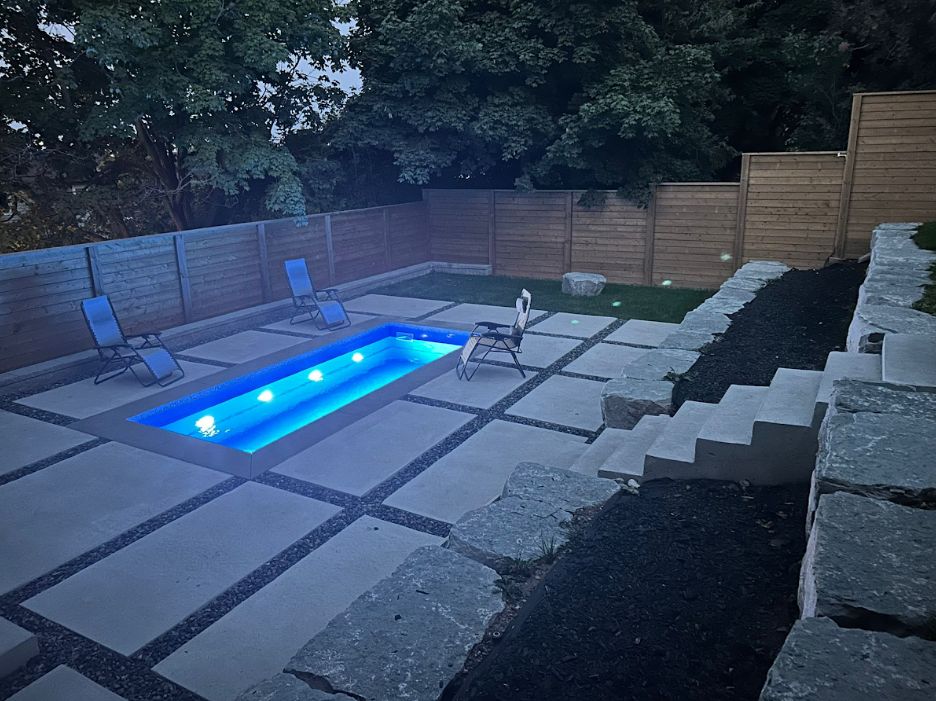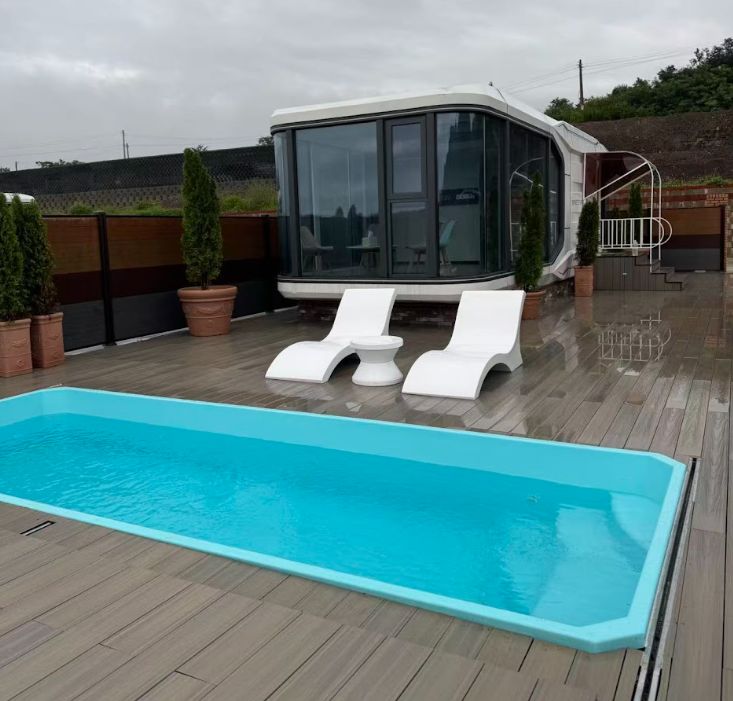
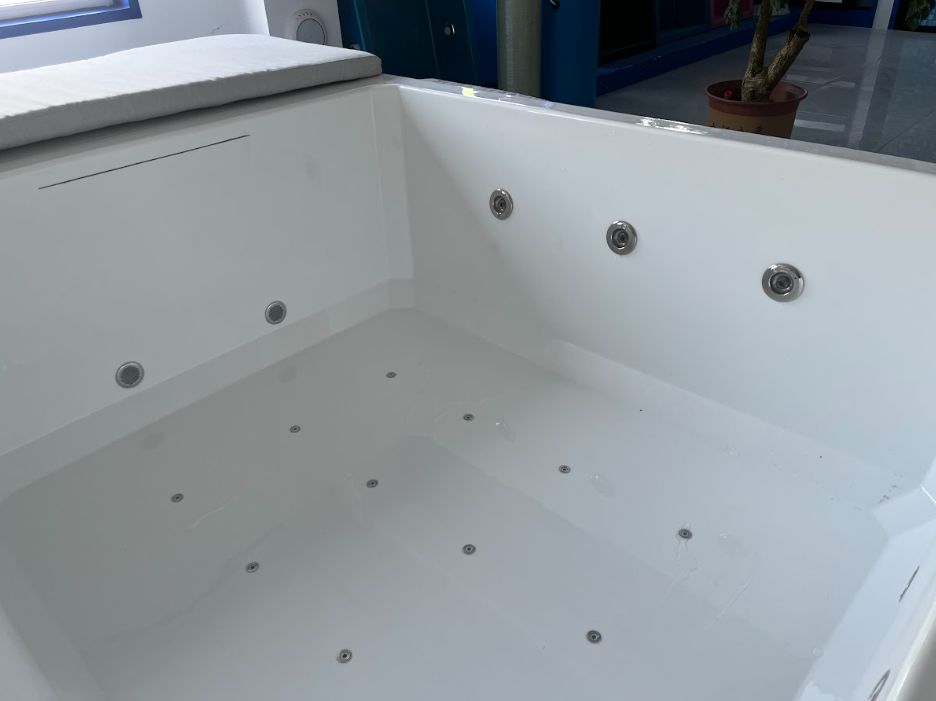
A fiberglass pool can be paired with saltwater chlorination when the surface and connected equipment are approved for the selected system. The decision should cover the entire installation, including fittings, heater, controls and maintenance requirements. Fiberglass construction alone is not a complete compatibility statement.
A salt chlorinator generates chlorine from dissolved salt. It changes how sanitizer is produced; it does not create a chlorine-free or maintenance-free pool.
Confirm suitability in writing
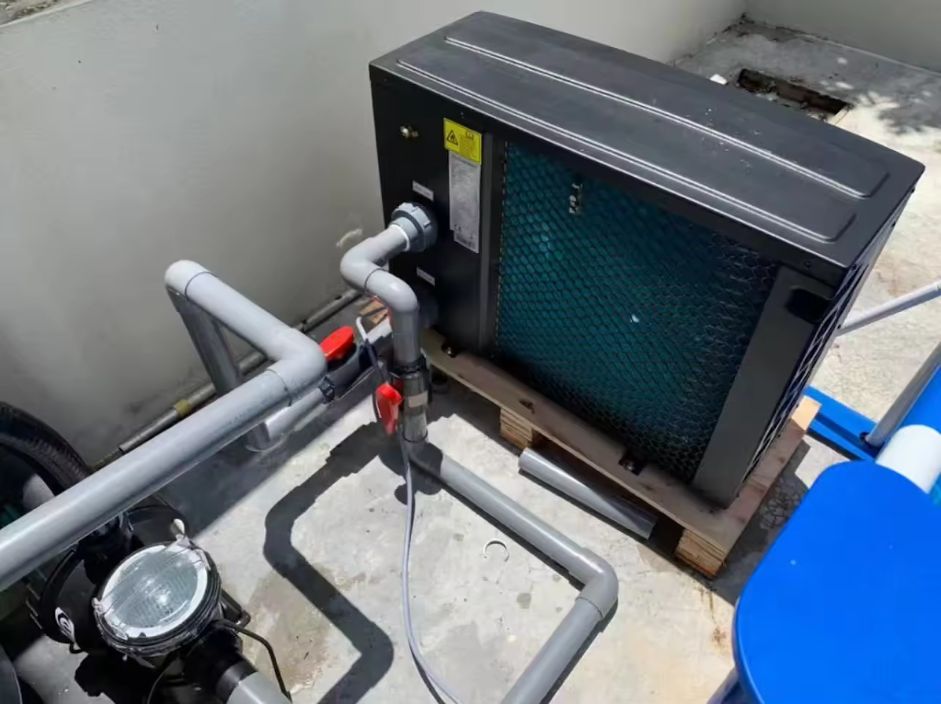
Ask the pool supplier for the approved water-chemistry conditions and any restrictions relevant to the surface. Have the installer check the proposed chlorinator, heater and metal components against their manufacturers’ instructions.
If a quotation includes a generic saltwater option, request the actual equipment model and its installation requirements. Confirm who verifies that the whole combination works together and who handles commissioning.

Compare the operating routine
| Task | What the owner still needs to do |
|---|---|
| Water testing | Check sanitizer and water balance as directed |
| Equipment inspection | Monitor the cell and system indicators |
| Surface care | Use methods approved for the actual finish |
| Seasonal operation | Follow model-specific cold-weather and shutdown guidance |
The Pentair sanitation overview describes different sanitation approaches and the continuing role of water care. Follow the instructions for your selected equipment rather than transferring settings from another owner’s pool.
Plan access and replacement
The cell must be accessible for inspection and service. Ask how it is removed, which replacement part is required and whether the control system reports useful faults. Keep component model information with the owner manuals.
Do not use an improvised cleaning procedure or add salt without checking the measured condition and equipment guidance. Incorrect assumptions can create problems that are unrelated to the fiberglass shell itself.

Compare total ownership requirements
Consider initial equipment cost, replacement consumables or components and the convenience of the routine. A salt system may suit your preferences, but it should not be purchased on an unsupported promise that all chemical handling or water testing disappears.
For an existing pool, have the installer review current components before conversion. A new chlorinator does not retroactively approve older fittings or heating equipment.
When requesting a KaixinPools integrated pool, state your preference for salt chlorination. Ask for a documented compatible configuration and a clear owner-care handover from the installation team.