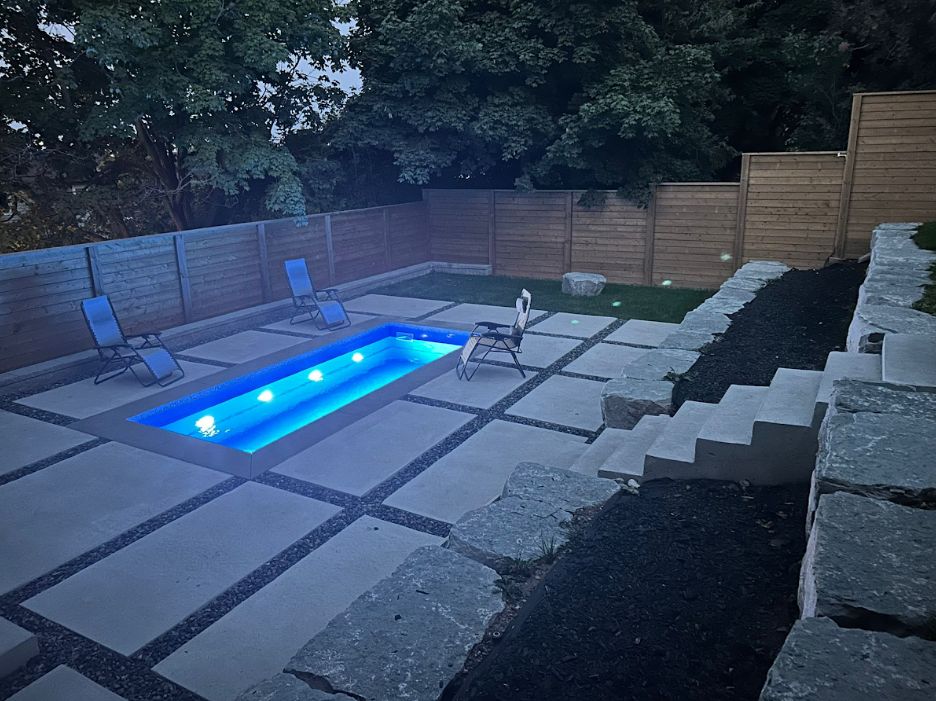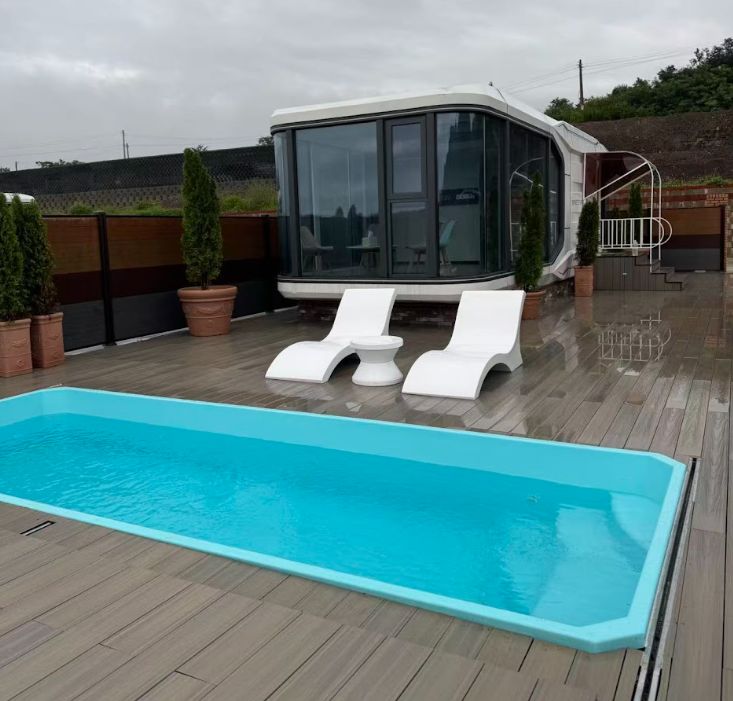
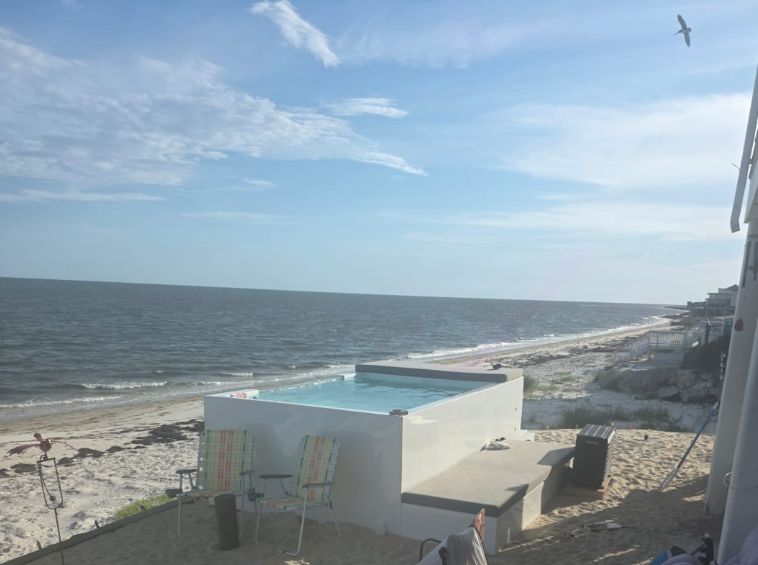
An infinity-edge container pool sends water over a specially designed edge into a collection system before returning it to the pool. The disappearing-edge effect depends on the viewing angle, water level and surrounding landscape. It is a complete circulation and structural design, not simply a container pool with one wall made lower.
Check whether the effect suits the site
Look from the positions where people will spend time, including inside the pool and on nearby seating. The edge works visually when the collection area is hidden from the intended viewpoint and the background supports the effect.
A natural slope can help, but the important design issue is the relationship between water level, foreground and background. A flat site may need constructed height changes and extra space. If the view is mainly a nearby fence, a simpler pool may give similar enjoyment with less complexity.

Understand the water route
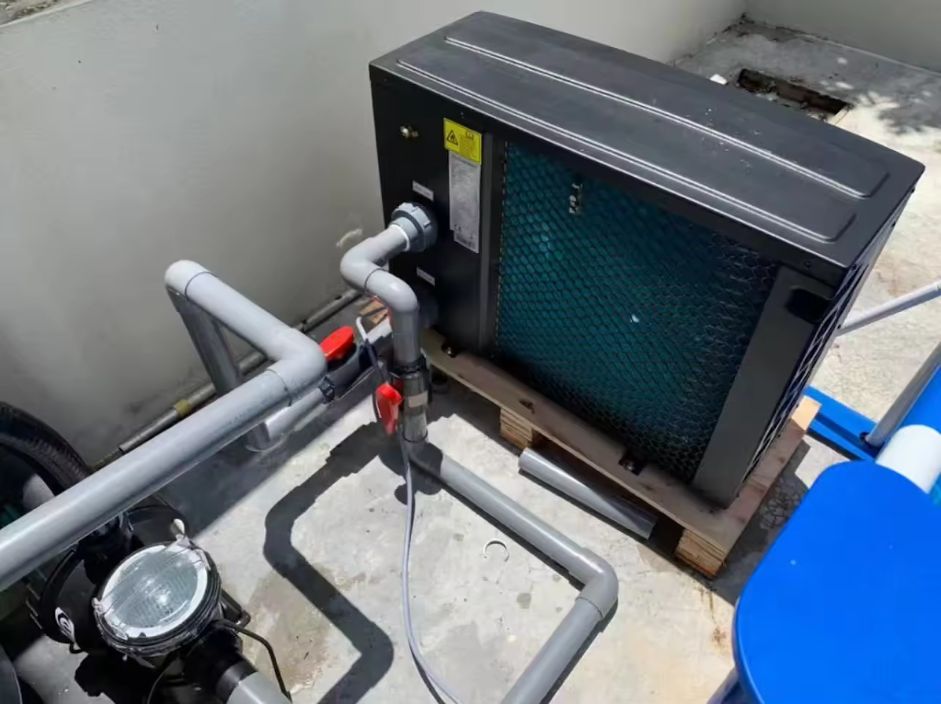
Water crossing the edge must be captured, held and returned. A collection channel or basin and, where required by the design, a balance tank provide room for the changing volume. The system needs to handle people entering, waves and water draining back when pumps stop.
The designer should calculate that capacity and the required flow. An undersized collection arrangement can lose water or cause operating problems. Normal filtration, overflow circulation and water-level control must work together.

Review the supporting structure
The container or purpose-built frame, pool interior and overflow opening must be designed as one assembly. Exposed edges may need support different from an ordinary buried wall. Changes to an existing unit require an engineered review.
Do not choose an edge profile from a picture and ask a fabricator to cut the wall down. The change affects water retention, structure, finishes and the ability to maintain a consistent overflow.
Allow space for the parts you do not see
The collection area needs cleaning and service access. Pumps, level controls and any balance tank also require maintenance. Include these spaces in the site footprint instead of hiding them on the drawing to make the pool appear more compact.
Consider sound, wind-blown splash, evaporation and heating. Ask how the system operates when the pool is covered or idle. The overflow does not need to be treated as a decorative feature that runs without considering operating cost.
Compare the full proposal
Evaluate the pool, structural work, overflow equipment, collection system, controls and local installation together. Check the effect from a realistic eye level in the design view before committing to the additional work.
Kaixin Pools can review an infinity-style container pool concept against your site and product requirements. Send the view direction and ground levels so we can discuss feasibility and the scope that would need coordinated design.