A container pool can be considered for an indoor space when the pool system and building are designed for that use. Fitting the unit through an opening is only the first test. The building also needs to carry the filled load and manage the heat, moisture and services that come with an indoor pool.
Solve access before closing the building
Measure the complete unit in its delivery condition and plan the route to the final position. For a new building, placing the pool before the roof or a wall is completed may be possible. For an existing room, the access solution can be a major part of the project.
Do not assume the pool can be cut apart and reassembled. Any sectional approach must be designed and approved as such. Also consider future removal or replacement of equipment, not just the first delivery.

Verify the full load
Water is heavy: each cubic metre adds about one tonne. A hypothetical pool holding 15 cubic metres therefore contains about 15 tonnes of water before the structure and people are counted.
A structural professional needs to check the actual load distribution and support. An ordinary garage slab, upper floor or roof terrace should not be assumed suitable from appearance or floor area alone.
Design the room for moisture
An indoor pool releases water vapor into the air. Warm, moist air can condense on cold windows and building surfaces. The solution combines suitable dehumidification, ventilation, air distribution and building-envelope design.
A portable household dehumidifier or an open window is not a complete design for a pool room. Involve an indoor-pool HVAC specialist, and provide the water area, intended temperatures, usage and cover plan. These conditions influence the required system.

Plan services and maintenance together
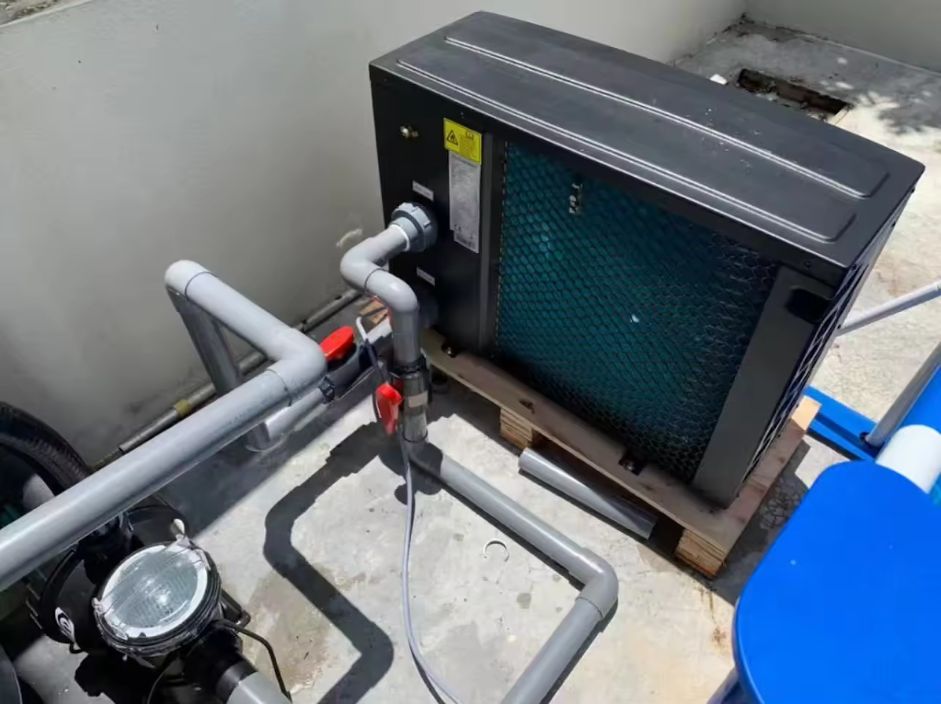
Provide the specified electrical installation, water supply and approved drainage arrangements. The equipment area needs suitable airflow, access and protection against water reaching electrical components.
Make room to open filters and replace equipment. Choose surrounding finishes suitable for the humid environment and wet use. A pool cover that is practical to use can reduce evaporation while the pool is idle, but it does not replace the room’s ventilation and moisture-control system.
Test the building and pool as one project
At handover, check the pool equipment and the room systems together. Look for condensation, persistent dampness or poor airflow during normal use. Record operating settings and the maintenance routine for both systems.
Kaixin Pools can discuss container pool configurations for an indoor project. Share the room dimensions, access route and intended use so we can provide product information for coordination with your local structural and building-services professionals.