Choose a pool heater from the swimming season, target water temperature and warm-up time you want. Pool volume matters, but so do wind, air temperature, exposed surface and cover use. The correct heater is the one that meets those conditions with an acceptable installation and running cost.
Decide between maintaining heat and heating on demand
If you swim frequently, keeping the water near a chosen temperature may suit the routine. If you use the pool occasionally, the speed of warming cold water becomes more important. Tell the equipment supplier which pattern applies.
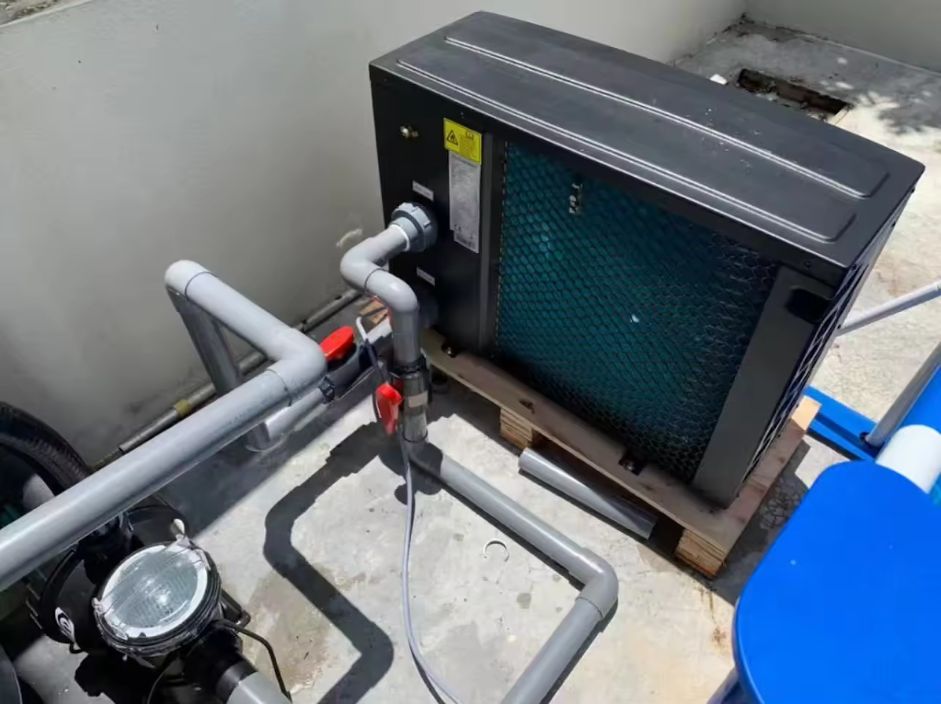
Air-source heat pumps move heat from the air into the water; their capacity and efficiency vary with conditions. Gas heaters can provide substantial heat output where suitable services and installation are available. Solar pool heating depends on sunlight and collector space. Compare actual equipment performance at your expected weather conditions rather than a single favorable rating.
Understand the energy needed for the first warm-up
As a physical estimate, heating one cubic metre of water by one degree Celsius takes about 1.16 kWh of heat before losses. A 30-cubic-metre pool raised by 5 degrees therefore needs about 174 kWh of heat.
If a heater actually delivers 10 kW to the water throughout that period, the ideal calculation is about 17.4 hours. Real heating takes longer when heat is being lost, and a heat pump’s output may change with the weather. This is a calculation example, not a promised heating time.

Reduce loss before buying more capacity
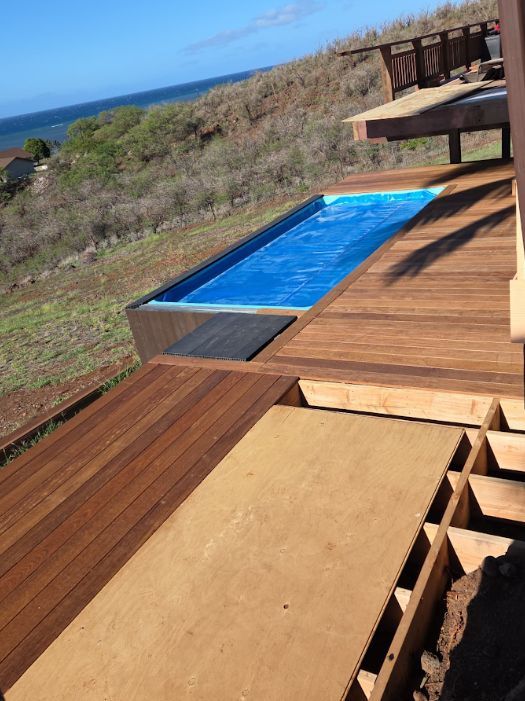
Use a suitable cover when the pool is not occupied and follow its operating instructions. Reducing evaporation helps retain heat. Consider wind exposure and the practical effort needed to cover the pool every day.
A thermal cover is not automatically a safety cover. Choose the required safety arrangement separately unless the product is explicitly rated for both purposes.

Compare electricity input with heat output
A heat pump’s delivered heat output is different from the electricity it consumes. For a hypothetical input of 2 kW over eight hours, electricity use is 16 kWh. At €0.25 per kWh, that is €4, excluding other equipment. Actual input and running hours vary; these are teaching figures only.
Ask for local-condition estimates and identify the assumptions. For gas, use the stated fuel input and local fuel price. Add circulation costs where the pump must run to support heating.
Check installation and compatibility
Confirm flow requirements, water-treatment compatibility, electrical or fuel supply, airflow, noise and maintenance space. A heater crowded into an unsuitable cabinet may perform poorly even if its advertised capacity looks sufficient.
Kaixin Pools can discuss heating as part of a fiberglass pool configuration. Send the destination, pool size and intended swimming months so the proposed equipment can be reviewed against your actual use.