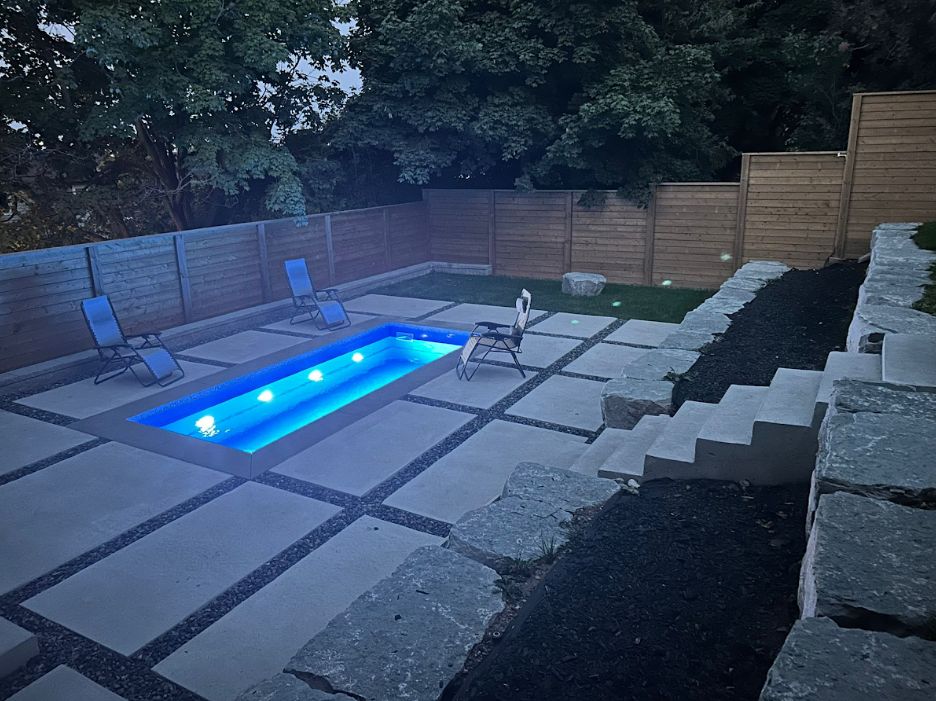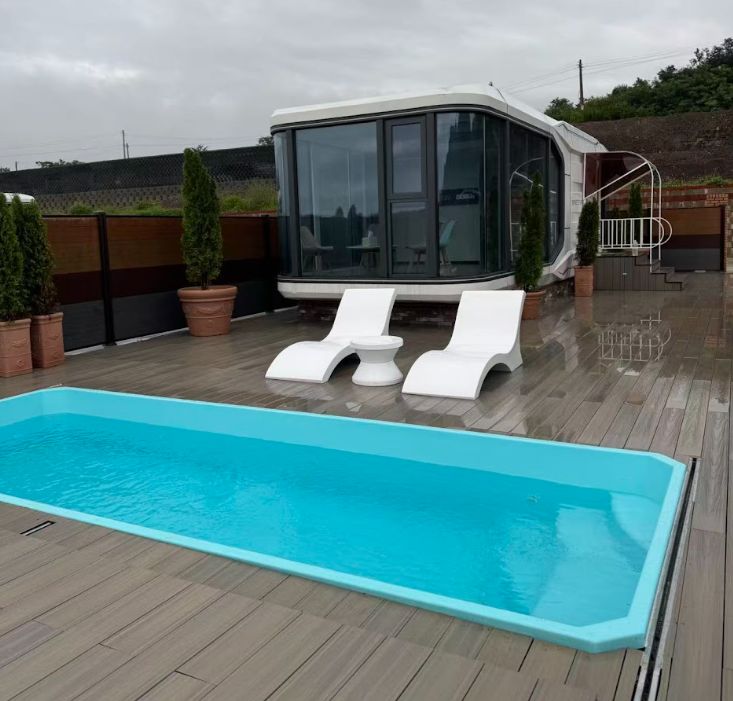
Clay soil does not automatically prevent a fiberglass pool installation. The concern is how the specific soil holds water and changes volume as moisture varies. A reliable project combines a site assessment, the correct support design and a drainage plan; the flexibility of fiberglass alone does not solve ground movement.
Understand the two main problems
Some clay soils swell when wet and shrink as they dry. The amount depends on their composition and site conditions. This movement can affect the pool, surrounding paving and connected pipes.
Clay can also drain slowly. Water may collect around an excavation or move toward it from higher ground. These are related issues, but they are not the same: a support problem needs more than a surface drain, and trapped water needs more than a strong shell.

Gather useful site evidence
Note where rainwater stands, where downpipes discharge and whether nearby paving or walls show movement. Record seasonal differences, including long dry periods followed by heavy rain. These observations help the professional assessment but do not replace soil investigation where needed.
Provide the proposed pool position and depth, existing services and any recent filling or construction. A garden that looks firm in dry weather can behave differently when excavated or saturated.
Coordinate the base and drainage design
The installer and relevant engineer should agree on excavation, supporting materials, backfill and groundwater provisions for the specific shell and soil. Use the manufacturer’s requirements together with the site assessment.
Do not assume that adding extra gravel fixes every clay site. Without a designed outlet, a permeable pocket can collect water. Similarly, a generic stabilizing additive or improvised concrete slab should not replace a specified solution.

Include the surrounding structures
Decks, retaining walls and paths can move differently from the pool. Their joints and connections need appropriate detailing. Pipes should be supported and routed so that predictable movement does not place avoidable strain on connections.
Manage roof runoff, irrigation and garden drainage so they do not create an uncontrolled wet area beside the pool. Keep inspection points accessible after landscaping is complete.
Know what to monitor after installation
Keep records of the original waterline, visible joints and surrounding levels. New gaps, uneven paving, unexplained water loss or a change in the shell’s position deserve prompt assessment. Do not drain the pool to investigate suspected movement without a professional plan.
Kaixin Pools can provide model and installation information for a proposed fiberglass pool. Share the soil assessment and site plan so your local project team can review the product alongside the required support and drainage arrangements.