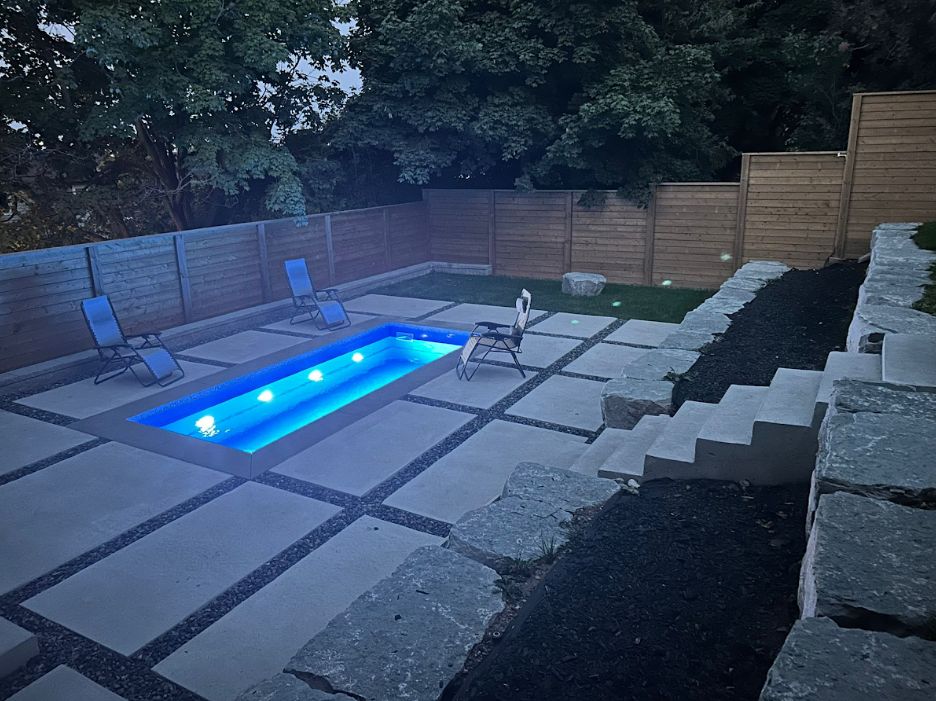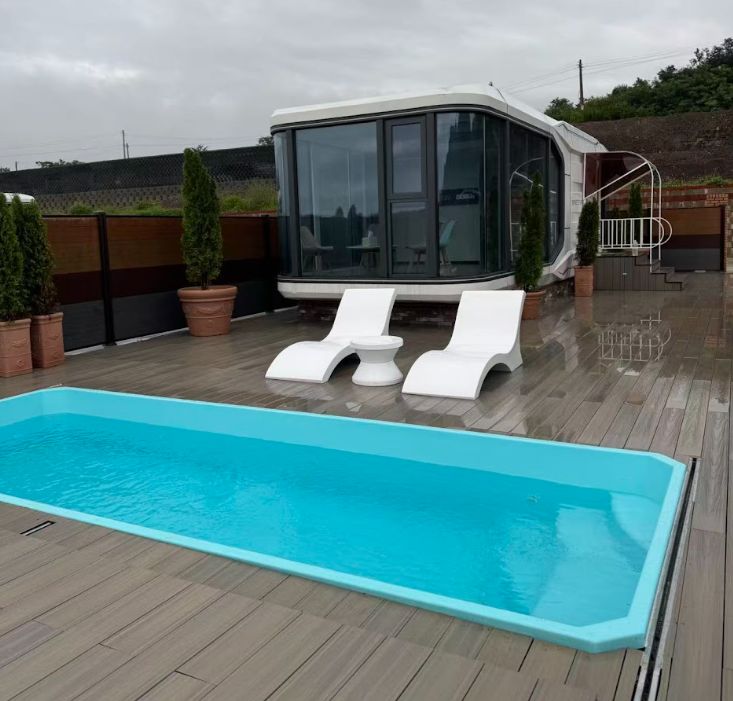
A fiberglass pool can be used for home laps when it provides enough clear length and width for the way you swim. There is no single residential size that suits every swimmer. Focus on the lane, turning points and ease of regular use rather than assuming that the longest available shell is the best choice.
Define the session you want
Decide whether you want gentle movement, short repeated lengths or longer uninterrupted swimming. These goals can lead to different layouts. A short pool may work well for brief sessions but involve frequent turns during a longer workout.
For a simple example, a 200-metre set takes 25 one-way lengths in an 8-metre clear lane. This does not account for how push-offs or stroke length change the effort. It simply helps you picture the frequency of turning before you buy.
Measure the lane after features are placed
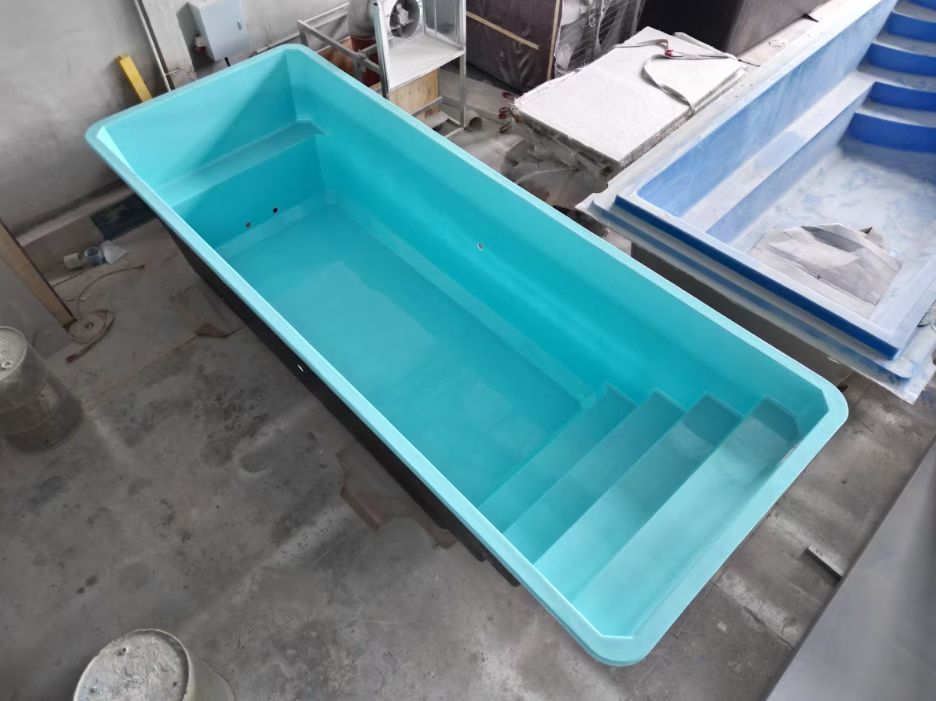
Look for a continuous line clear of benches, ledges and steps. Corner steps may preserve more length than a full-width entry platform, but the actual drawing decides. Check the width at every point along the route.
The end of the lane also matters. A swimmer needs an appropriate place to stop or turn without meeting a protruding fitting. Do not assume a residential shell supports competitive starts or diving; those require a specifically designed and approved arrangement.

Check how other users share the pool
If a seated person or someone entering blocks the lane, training and social use may need separate times. Alternatively, a model with a side seating area can reduce the conflict where space allows.
Choose depth by the activity and intended users. More depth is not automatically better for everyday laps, and a deep end may reduce useful standing space for other household activities.
Make regular use convenient
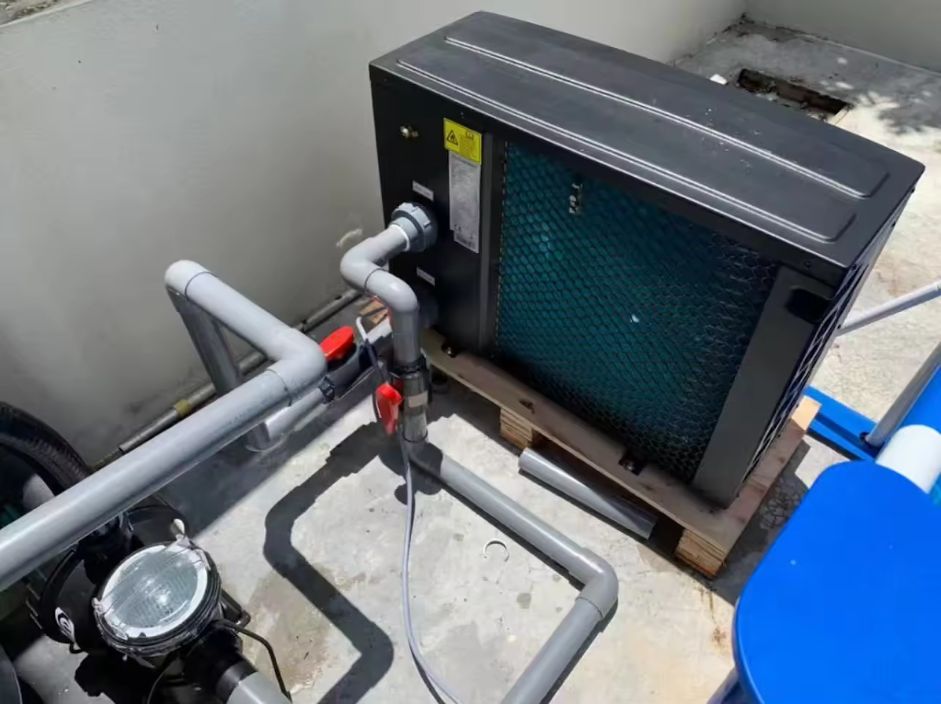
An easy-to-operate cover, a practical entrance and appropriate heating can matter more than a small increase in length. Think about opening the pool for a short session and covering it again when alone.
Include equipment access and a sensible cleaning routine. If the pool is difficult to maintain or uncomfortable during the months you want to train, extra lane length will not solve the problem.

When to compare a current system
If the site cannot provide enough length for the experience you want, a compatible swim-current system may offer continuous movement in less space. Try the current with your own stroke where possible. It is a different swimming experience, so compare comfort and control rather than treating it as an identical substitute.
Kaixin Pools can help compare fiberglass pool layouts for home exercise. Share your typical session, preferred stroke and site dimensions so we can discuss the clear lane, resting areas and feasible equipment options together.