Custom fiberglass pool pricing depends on what is being customized. Selecting an available finish or equipment option is different from changing shell geometry or requesting a new manufacturing design. The most useful quotation identifies which requests use existing options and which create additional engineering or production work.
Start with a dimensioned brief and a ranked list of requirements. Explain why each requested change matters so the supplier can compare a standard solution with the custom alternative.
Identify the source of the extra cost
| Requested customization | Potential cost effect |
|---|---|
| Available finish | Material or finishing option |
| Different equipment | Component, controls and installation interfaces |
| Changed dimensions | Design, production and transport implications |
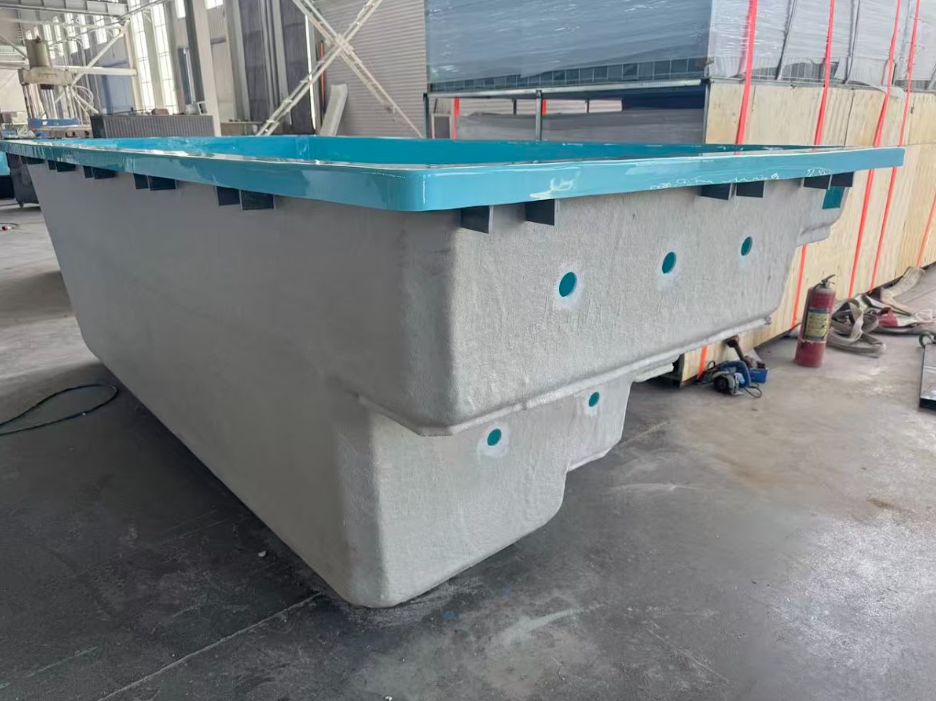
| New molded geometry | Possible tooling and development work |
| Special feature | Structural, hydraulic and inspection requirements |
These are cost categories, not a claim that every manufacturer offers every change. Ask what is feasible in the proposed product system before requesting a firm price.
Separate one-time work from the product
Where new design or tooling is needed, ask whether it appears as a separate charge and what it covers. Establish who approves drawings, how revisions are handled and what evidence confirms the agreed configuration.
If you are sourcing multiple units for a commercial project, quantity may affect how development costs are allocated. Do not assume a single-unit custom quote will scale directly without discussing the production and delivery plan.

Check the costs outside the factory
Custom dimensions can change packed size, transport route, lifting requirements and site support. A wider or deeper pool may also affect the surrounding design. Have the logistics and local installation teams review the current drawing before treating the supplier’s price as the project budget.
For modular systems, clarify what arrives assembled and what must be completed locally. Compare the total site workload rather than assuming modular or one-piece construction is always cheaper.

Use a baseline to make decisions
Ask for the nearest suitable standard model with the same essential equipment. Then request the cost and practical impact of each custom change. This reveals whether the benefit is worth the added complexity.
For example, if a special footprint is intended only to preserve a garden path, a different standard orientation may solve the problem. If the dimensions are imposed by an existing building, the custom work may be central to feasibility.
Send KaixinPools your drawing and priority list. Ask whether the MP range or an existing integrated model provides the most practical route, with design, equipment and delivery costs shown separately.