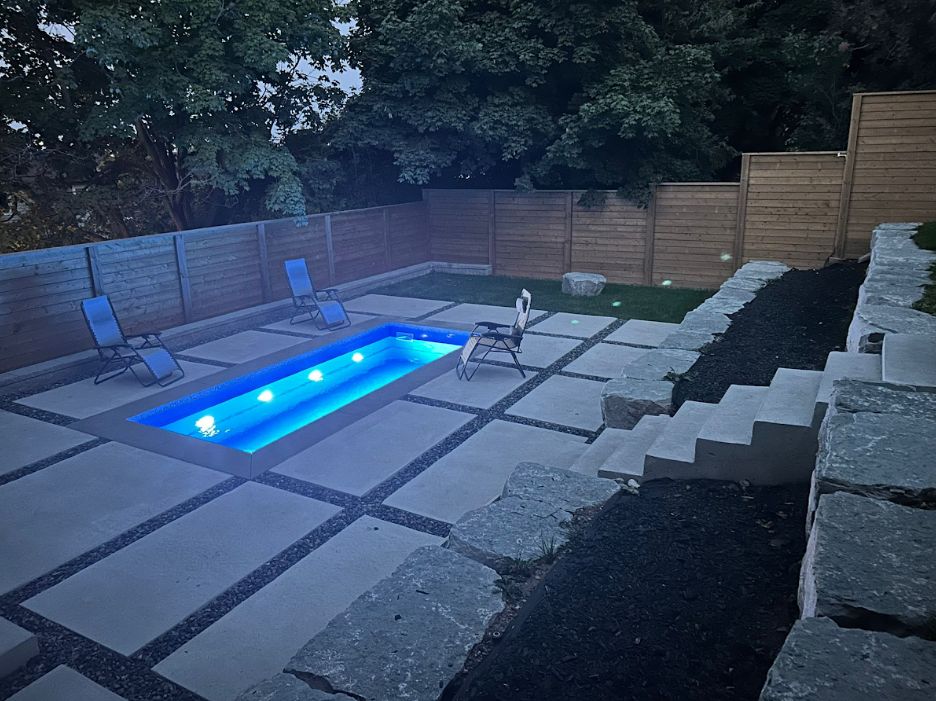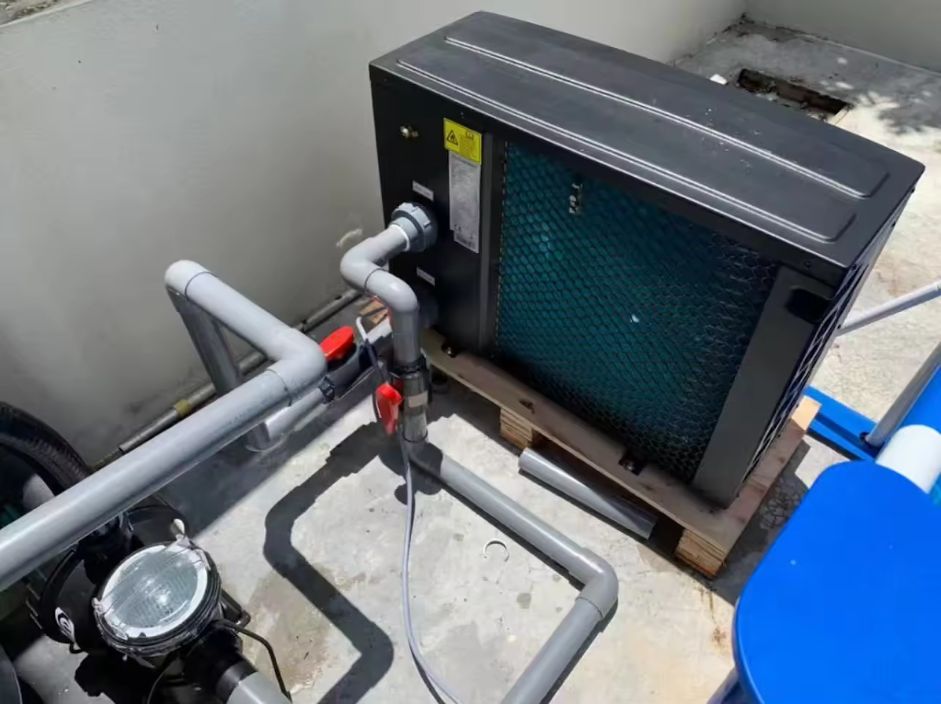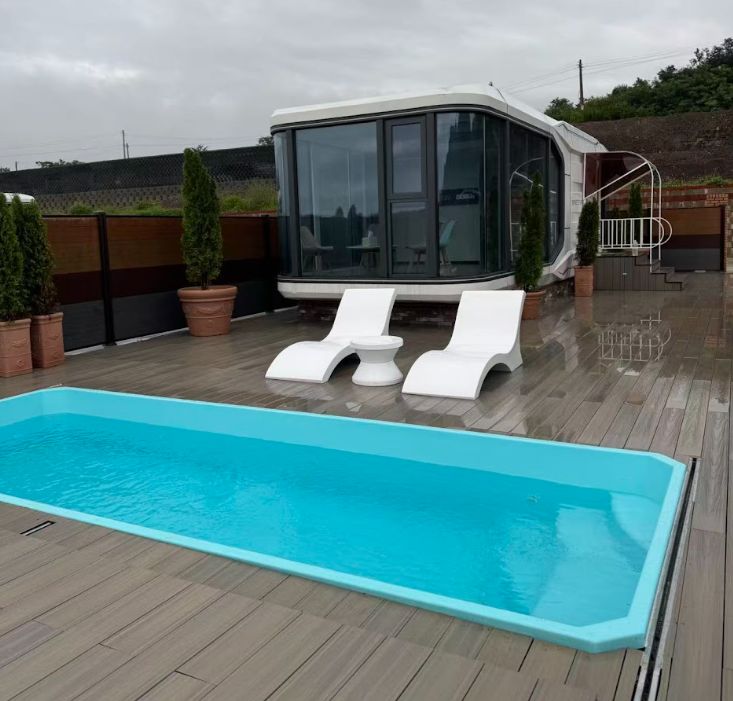
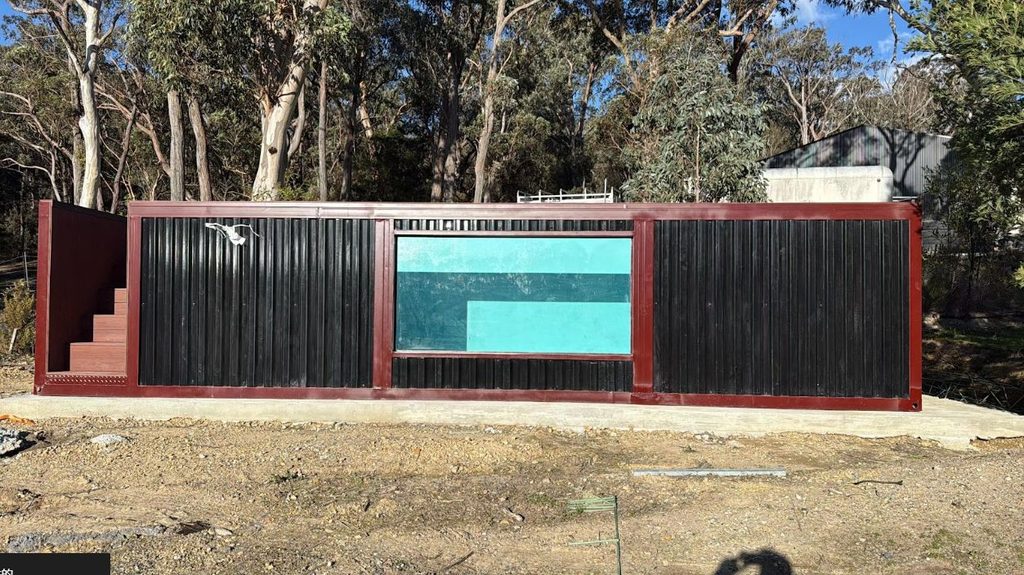
Above-ground installation can make the pool structure easier to inspect and reduce excavation. Inground installation can create a more level connection with the garden. Neither is automatically the better option. The decision depends first on the installation methods approved for the specific pool, then on levels, drainage and access at your site.
Why the same pool cannot simply be buried
A pool wall designed to hold water from inside is not necessarily designed to resist soil or groundwater from outside. Buried steelwork also needs an appropriate protection and drainage design. Equipment doors that work above ground may become inaccessible below the finished surface.
Before choosing a depth of burial, obtain a section drawing showing the supporting structure, ground level and any required retaining system. Do not place soil against an unapproved wall or assume decorative cladding is waterproofing.
When above ground makes sense
Above-ground placement is worth considering where you want to see the outer finish, keep equipment accessible or limit digging. It can suit a garden where a raised pool becomes part of a seating area.
The trade-off is entry height. External stairs and a landing need space, and the pool wall may interrupt views from the house. Check the scene from a seated position, not only while standing beside the pool. The foundation still needs to carry the full load and manage rainwater.

When a buried installation may work better
A permitted inground design can connect well with a terrace and reduce the need for tall entry steps. However, the project may need excavation, spoil removal, groundwater management and a separate accessible equipment area.
On a sloping site, a partly buried pool may appear low from one side and fully exposed from the other. Both sides need to be designed. The pool should not become a retaining wall unless the engineered system specifically provides for that job.
Compare levels and water routes
Ask the designer to draw the house threshold, finished deck, pool waterline and surrounding ground on one section. Then trace where heavy rain will go. Water should not collect against the structure or flood the equipment area.
Also plan how an installer can reach fittings later. A clean flush finish loses its appeal if a small leak requires breaking a large patio to gain access.

Make a fair cost comparison
Compare complete arrangements: above-ground pool plus access steps and finishes against a buried pool plus earthworks, drainage and retaining work. Include the required safety measures and local approvals in both. The pool body’s price alone does not decide which option costs less.
Kaixin Pools can discuss container pool models and their available installation configurations. Share your site levels and preferred appearance so we can help develop a layout for review with your local installer.