Pool Heat Pump vs Gas Heater for Speed and Running Costs
A pool heat pump often suits regular temperature maintenance in a suitable climate. A gas heater often suits faster heating for occasional use, especially when a high heat output is needed. The cheaper option depends on local energy prices, equipment efficiency and how you use the pool. Neither technology is always the best choice, and heating speed should be compared using useful heat delivered to the water.
They obtain heat in different ways
An air-source heat pump uses electricity to move heat from outdoor air into the pool water. It is different from an electric resistance heater, which creates heat directly with an element. A gas heater burns natural gas or propane and transfers part of that energy to the water through a heat exchanger.[8]
Heat-pump performance changes with air conditions and water temperature. Gas heating relies on a fuel supply rather than extracting heat from outdoor air, although the pool itself still loses more heat in unfavorable conditions.

Gas is often faster because available output is higher
Many gas pool heaters are offered with higher heating capacities than typical domestic heat pumps. That is why they are often used for a quick temperature increase. The underlying rule is simpler: more useful heat reaching the same volume of water produces a faster rise, after allowing for losses.
Compare output with output. A gas rating may describe fuel input, while a heat-pump rating may describe heat output at specific test conditions. Comparing those numbers directly can overstate what one unit delivers. At the same actual heat output and pool heat loss, the water does not heat faster merely because the energy source is gas.
Compare the cost of the same amount of heat
For a heat pump, COP means heat output divided by electricity input at stated conditions. A COP of 4 means 4 units of heat are delivered for each unit of electricity consumed by the rated equipment. It does not mean every installation maintains that performance throughout the year.[9]
Here is an illustrative comparison using invented tariffs, not a quotation. To deliver 100 kWh of heat, a heat pump operating at COP 4 uses 25 kWh of electricity. At $0.24 per kWh, that costs $6. A gas heater operating at 90 percent thermal efficiency needs about 111 kWh of fuel energy. At $0.08 per kWh of fuel energy, that costs about $8.89.
If the heat pump’s COP falls to 2, its electricity cost in that example becomes $12. This reverses the result. The calculation excludes circulation, standby use, service and installation. Gas sold by volume or therm must be converted to comparable energy units before using this method.

Match the heater to your schedule
If the pool is used most days and can warm gradually, maintaining temperature with a heat pump may fit well. If you want to heat a cold pool for a short, occasional visit, a higher-output gas heater may better match the schedule. Fuel availability and the capacity of the electrical or gas connection can affect either choice.
Some projects use both technologies, but the extra equipment and controls need a clear purpose. A smaller residential pool does not automatically justify a combined system. A suitable cover can reduce heating demand whichever technology is chosen.
Plan heating alongside the pool
Tell Kaixin Pools where the pool will be installed, which months you plan to use it and how quickly you want it ready. We can discuss heating options for the proposed pool and the information your local installer needs to confirm a suitable system.
What Size Pool Heat Pump Do You Need
The right pool heat pump must do two jobs: replace heat the pool loses and raise the water temperature within your preferred time. Pool volume helps calculate the energy needed for warming up. Surface area, weather and cover use help determine ongoing heat loss. A label such as “suitable for pools up to 30 cubic meters” is only useful when its assumed conditions match your project.
Water volume determines the energy for a temperature rise
More water requires more heat for the same increase in temperature. A useful estimate is 1.163 kWh of heat for each cubic meter of water raised by 1°C. This is heat delivered to the water, not electricity consumed by the heat pump.
For example, warming 12 cubic meters by 6°C requires about 83.7 kWh before allowing for heat loss. If that rise must happen in 12 hours, the average heat retained by the water must be about 7 kW. The unit needs to deliver more than that because the pool also loses heat during the warming period. These figures illustrate the method; they are not a recommendation to buy a 7 kW unit.
Surface area helps explain the ongoing demand
An open water surface exchanges heat with the surrounding air. Evaporation, wind and the difference between water and air temperature influence that loss. Two pools with the same volume but different surface areas can therefore have different maintenance-heating needs.
A cover changes this calculation by limiting evaporation while it is in place. Sizing on the assumption that a cover is used every night may produce disappointing results if the pool is actually left open. For an exposed above-ground pool, heat losses through the structure also belong in the assessment.

The coldest planned month matters more than summer weather
A unit that comfortably maintains temperature in warm weather may struggle in a cool shoulder season. Air-source heat-pump output and efficiency vary with air temperature, humidity and water temperature. Some units also spend time defrosting in suitable cold conditions.
The relevant specification is the unit’s performance near your intended operating conditions. A large number measured in warm air does not show what the same machine will deliver on a cool evening. Model-specific performance tables are more useful than comparing model names or maximum advertised pool volumes. [10]
Heating hours change the required capacity
A pool that can heat gradually over a long period needs less recovery capacity than one that must warm quickly before a short visit. Limits on equipment operating hours can make this difference larger.
Using the earlier example, spreading the 83.7 kWh warming requirement across 24 hours reduces the required retained heating rate to about 3.5 kW, before losses. Shortening it to 6 hours raises that figure to about 14 kW. The water volume is unchanged; the expected readiness time changes the required output.

Bigger equipment is not automatically a complete solution
More capacity can reduce recovery time, but the unit still needs compatible water flow, electrical supply, controls and airflow. A heat pump enclosed in an unsuitable equipment box may not perform as intended. Physical space and manufacturer clearances also affect which model can be installed.
For a useful selection, provide the pool’s water volume and surface area, location, target temperature, intended months of use, cover routine and acceptable heating time. The equipment supplier can then use actual performance data and a site-based heat-loss estimate rather than a single size chart.
Prepare the heating specification with Kaixin
Kaixin Pools can help organize these requirements alongside your pool design and discuss compatible equipment options. Share your climate and swimming schedule so the proposed heating arrangement reflects how you plan to use the pool.
How Long Does It Take to Heat a Pool
Pool heating can take several hours or much longer, depending on water volume, the temperature increase and the useful heat left after losses. There is no single heating time for every small pool. A calculation gives a useful starting point, but the heater’s actual output and the weather determine how closely the pool follows that estimate.
Start with the temperature increase you need
Subtract the current water temperature from the target temperature. Raising water from 20°C to 28°C requires an 8°C increase. Raising it from 26°C to 28°C requires only 2°C. The second task requires one quarter of the heat for the same volume, before accounting for losses.
This explains why the first warm-up after filling feels very different from daily temperature maintenance. A heater that maintains an already warm pool successfully may still need a long time to heat a cold fill.
Estimate the heat required by the water
Multiply the water volume in cubic meters by the temperature rise in degrees Celsius, then by 1.163. The result is approximately the required heat in kWh. For 10 cubic meters and an 8°C rise, that is about 93 kWh.
Next, divide by the heater’s average heat output in kW. If 10 kW reaches the water continuously and no heat escapes, the warm-up takes about 9.3 hours. This is an ideal estimate, not a promised heating time. Electricity consumption is a separate calculation and depends on the heater type and efficiency.

Subtract heat loss for a more realistic estimate
The heater adds heat while the pool loses it. Suppose, purely for illustration, the same heater supplies an average of 10 kW but average heat loss during the period is 2 kW. Only 8 kW remains to raise the water temperature. The 93 kWh requirement would then take about 11.6 hours.
If losses averaged 4 kW, the retained heating rate would fall to 6 kW and the estimate would become about 15.5 hours. These loss figures are examples, not standard allowances. Actual losses vary throughout the warm-up as temperatures and weather change.
Use actual output rather than electrical input
For a heat pump, a 10 kW heating-output figure does not mean it draws 10 kW of electricity. Its output can also change with air and water conditions. For a gas heater, a stated fuel-input rating must be adjusted for thermal efficiency to estimate heat reaching the water. [9]
If equipment information uses Btu per hour, convert to the same units before calculating. Approximately 3,412 Btu per hour equals 1 kW. Mixing an input rating with an output rating can produce a heating-time estimate that looks precise but is wrong.
A cover and operating schedule change the result
A suitable cover limits evaporation when the pool is unused, leaving more of the supplied heat available to warm the water. Wind, cool nights and exposed water can increase demand. Sunshine may add heat, so two otherwise similar days can produce different results. [11]

Equipment only heats while it is able and scheduled to run. A calculated 12 hours of active heating may take more than one day if the system operates for only 6 hours daily, especially when the water cools between sessions. Flow restrictions or equipment faults can also prevent the expected output; increasing the thermostat does not correct those problems.
Plan backward from when you want to swim
For an established pool, a record of starting temperature, weather, cover use and actual warm-up time gives a more useful schedule than a generic promise. For a new pool, specify how quickly it should be ready before choosing equipment.
Kaixin Pools can discuss pool volume and heating options as part of your project. Send your location, expected starting and target temperatures, and preferred readiness time so we can help define a practical equipment brief.
Plunge Pool vs Hot Tub for Everyday Use
A plunge pool is generally the better starting point if you want open water for cooling off and light movement. A hot tub is generally the better starting point if you want heated soaking with purpose-built seats and massage jets. Both can be compact, but they are designed around different experiences. Heating a plunge pool does not automatically give it the features of a hot tub.
Water temperature is only part of the difference
A plunge pool may be unheated, heated or fitted with suitable cooling equipment. The word “plunge” does not mean that it must contain cold water. A cold-plunge installation is a more specific application with its own equipment requirements.
A hot tub is designed around heated soaking. Its heater, controls, cover and insulation typically work together to maintain that use. The suitable temperature range depends on the product and user. Raising a standard pool’s thermostat beyond its approved operating range is not a substitute for choosing a system designed for warmer water.
Open water and molded seats serve different needs
A compact pool can leave a clear area for standing, stretching and gentle movement. Some models also have benches. A hot tub usually devotes more of its interior to individual seats, footwells or reclining positions.[4]
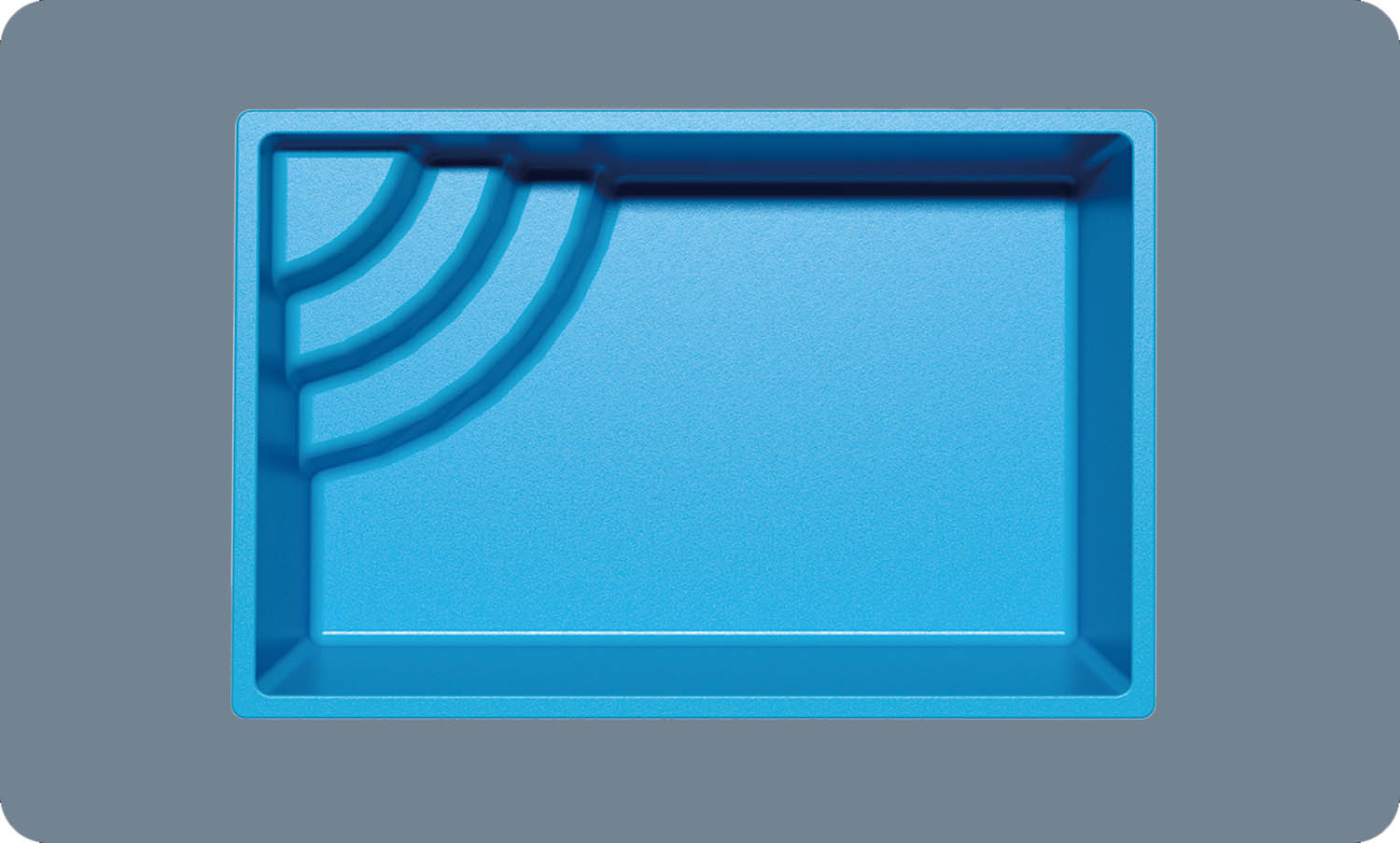
That means an equally sized hot tub and pool may offer very different usable space. The pool can feel more open, while the hot tub supports the body in specific positions. For a household that wants both, a design with one seating side and one open side may be worth discussing, but it still needs an appropriate equipment specification.

Pool outlets are not massage jets
Ordinary return outlets move filtered water back into the pool. Massage jets are arranged to direct water, sometimes mixed with air, toward specific areas of the body. Their effect depends on placement, flow, controls and seating position.
A high jet count alone does not explain comfort. Several poorly positioned jets may be less useful than a smaller number that align with the person using the seat. Nor does the presence of jets prove that a pool offers a therapeutic or medical benefit.
Running costs depend on more than water volume
A hot tub may contain less water, which reduces the energy needed for a given temperature increase. But maintaining warmer water can increase heat loss to cooler surroundings. A larger plunge pool operated at a lower temperature and covered when unused may follow a very different heating pattern.
Insulation, cover use, local weather, energy prices and operating hours all affect the bill. Comparing only the heater’s power rating or the number of liters can therefore be misleading. Compare the same expected use, such as daily warm soaking or occasional summer cooling.
Both require regular water care
Small size does not remove the need for filtration, disinfection and balanced water chemistry. Several people in a small volume of water can create a high treatment demand. Cleaning and water-care schedules should match the equipment instructions and actual use.[5]
For either option, the project also includes a suitable base, delivery access and access to service components. A preassembled unit still needs appropriate site preparation and local installation arrangements. Space for the cover when removed should be part of the layout too.
Choose the experience you will use most
For cooling off with room to move, start with a plunge pool layout. For seated warm-water relaxation with targeted jets, start with a hot tub specification. If your needs overlap, define the temperature, seating and jet functions individually rather than relying on a product label.
Kaixin Pools can discuss compact fiberglass pool layouts and available equipment options. Send us your available space and preferred daily use so we can explain which configurations suit the project and which functions need additional equipment.
Fiberglass Pool Colors and Why Water Looks Different in Photos
The color of a fiberglass pool’s inner finish is only one part of its final appearance. Water depth, daylight, reflections and the camera all affect the color you see. That is why a dry white sample can produce a blue-looking pool, and why the same installed pool can look bright in one photo and much darker in another. Choosing a color family is more reliable than expecting an exact match to a single image.
The finish sets the starting point
Light finishes often produce a lighter-looking body of water, while deeper blue finishes can create a stronger blue appearance. Sand-colored finishes may give the water a turquoise or green-blue character. Gray finishes can look quite different depending on their shade and the surrounding light.
These are broad visual tendencies, not guaranteed results. Manufacturers use different pigments, flakes and surface systems. Two products with similar color names may therefore look different. A finish sample shows the material itself; an installed-pool photo shows that material interacting with water and its setting.[6]
Water depth changes the effect
Water absorbs and scatters light, and the distance light travels through it affects what reaches your eyes. A shallow step can look noticeably lighter than the deeper floor even when both have exactly the same finish.

This matters when choosing from a photo of a deeper pool. A compact, shallower model may not reproduce the same dark-water effect. It also explains why the floor, seat and steps can appear to be different shades in one pool without being different materials.[7]
Sunlight and reflections change throughout the day
Direct sun can make the water appear brighter and bring out sparkle in some finishes. Shade generally produces a more subdued appearance. The viewing angle also changes how much of the pool interior you see compared with reflections on the surface.

Trees, walls and buildings can appear in those reflections. A pool beside dense planting can have a greener-looking surface in some conditions than the same finish in an open paved yard. That reflected color does not, on its own, show that the finish has changed.
A camera can change the color again
Phones automatically adjust brightness and white balance. Editing can then increase saturation, deepen blue tones or brighten shaded areas. Screens also display color differently. These changes make an attractive marketing photo a useful style reference, but an imperfect color specification.
A rendering has a similar limit. It can help compare a light finish with a dark one against the same patio and exterior cladding, but it cannot guarantee the exact water color at every hour or in every season.
Choose the appearance you want to live with
For a bright, light-water look, start by comparing pale finishes. For a stronger blue presence, compare medium and darker blue options. For a softer natural look, include sand and gray families. Then narrow the choice using images of the same finish in water at a similar depth, alongside an actual sample.
This process answers two separate questions: whether you like the material up close and whether you like its broader effect in the yard. No color eliminates cleaning. A sudden change in water clarity or color should be investigated as a water-care issue rather than explained away as a finish effect.
Match the pool finish with your outdoor design
Kaixin Pools can discuss available interior finishes and exterior options for suitable models. Share your preferred water appearance and photos of the surrounding paving or garden. We can help compare options and use a 3D design to show their relationship, while explaining the natural limits of image-based color matching.
Small Backyard Pool Ideas That Leave Room for a Patio
A small backyard usually works better when the pool sits beside one useful outdoor living area, rather than in the middle of several narrow leftover spaces. A slim pool along one side can preserve a long patio. A compact pool at the far end can leave room for dining near the house. The best layout depends on how you want to spend time outside, both in and out of the water. [1]
Put a narrow pool along one side
A rectangular pool can follow the long side of a rectangular yard, leaving the opposite side as a continuous patio. This arrangement suits a garden where people need to walk from the house to a rear gate without weaving around furniture.
The benefit comes from keeping the remaining space together. Two narrow strips on opposite sides of a central pool may have the same total area as one wider strip, but they are much harder to use for a dining table. Placing a pool near a boundary still requires suitable separation, construction access and any locally required setbacks.
Place a compact pool beyond the dining area
If outdoor meals matter more than swimming space, keep the patio next to the house and put a small pool beyond it. Carrying food outside stays simple, and the pool becomes the view from the table instead of an obstacle on the way there.
A square or short rectangular pool often fits this arrangement. A longer pool would leave less distance between the house and water. A corner position can also work, provided it leaves room for the pool entrance and access to equipment. Filling every corner with permanent planting can make later servicing difficult.
Use one shared deck instead of several small platforms
For an above-ground pool, a deck along one long side can connect the pool entrance with a sitting area. Compared with wrapping a large deck around all four sides, this concentrates the usable space where people gather.
However, the deck and stairs add to the footprint. A raised pool does not automatically save ground area. Nor does decorative pool cladding automatically support a deck. Any attached platform needs an appropriate structural design, and the finished layout must accommodate access and safety requirements.

Choose seating without losing all the open water
A built-in bench creates a place to sit in the water, but it reduces the clear area for movement. For relaxed conversation, that trade-off may be worthwhile. For children’s supervised play or light exercise, a shorter bench can preserve more open floor space.
The same applies outside. A fixed seat along a wall may use space efficiently, while movable chairs let you change the layout. Either arrangement still needs room for people to pass when someone is seated.
Compare useful space rather than pool area alone
Imagine two layouts with the same pool and the same total paving. In one, paving is divided into narrow strips around the water. In the other, most of it forms one rectangle beside the pool. The second layout is usually easier to furnish, even though the area totals match.
Draw the actual table, chairs in use, pool entrance and equipment access on the plan. This reveals whether the remaining patio functions as a place to spend time. Local approval, fencing and drainage requirements remain part of the design for both raised and in-ground pools.
Plan a pool around your backyard
Kaixin Pools is a Chinese manufacturer of fiberglass and container-style pools. Send us your yard dimensions, a few photos and the outdoor space you want to keep. We can discuss suitable pool options and a 3D layout that brings the water, patio and seating together.
Cocktail Pool vs Plunge Pool and How to Choose
A cocktail pool usually emphasizes sitting, conversation and relaxing with a small group. A plunge pool usually emphasizes cooling off or enjoying a compact body of water. However, the names overlap, and there is no universal size or depth that separates them. One pool can serve both purposes. The useful difference is its layout and equipment, rather than the name on the brochure.[3]
Seating changes how the pool feels
For a social pool, seats are a central feature. A bench along two sides can let people sit facing one another. A single long bench leaves more open water, but everyone may face in the same direction. Steps can provide entry without offering the comfort or space of a seat designed for longer use.
In a pool intended mainly for cooling off, a more open center may matter more than extra seating. It gives people room to stand, turn and move without working around benches. Neither arrangement is automatically better; each uses the available space differently.

Depth should match the activity
A pool described as a plunge pool is not necessarily an ice bath or a very deep pool. A cocktail pool is not necessarily shallow enough for every adult to stand comfortably. Those expectations need actual water-depth measurements.
For seated use, the relationship between seat height and water level determines how much of the body is underwater. For standing use, floor depth matters more. In a mixed-height household, the same water depth can feel quite different to different people. A deeper pool also does not become suitable for diving simply because the word “plunge” appears in its name.
Heating and jets are separate choices
Either type may be offered with heating or jets, depending on the design. Those features are not guaranteed by the category name. Water-circulation outlets, decorative bubbling and targeted massage jets perform different jobs.
A heater can extend comfortable use, but the shell, equipment and controls must suit the intended temperature. Adding a heater alone does not turn a compact pool into a hot tub. If massage is a priority, seat shape, jet position and the complete system matter more than a long list of optional accessories.
More guests do not always require a longer pool
The usable seating arrangement can matter more than overall length. A short pool with well-spaced seats may suit a small conversation group better than a longer pool with only one small bench. Conversely, filling a compact shell with seats leaves less room for movement.
Think about the group that will use the pool most often. A couple who normally relaxes together does not necessarily need to sacrifice patio space for occasional larger gatherings. Guests can also spend time in an adjoining seating area rather than all being in the water at once. Occupancy should remain within the product’s intended use and specifications.
Compare complete packages before comparing prices
Similar-looking pools can include different equipment. Heating, lighting, steps, covers, delivery and site work all affect the final project cost. A lower shell price is not a lower installed price when more items must be added separately.
If your priority is conversation, favor a layout with comfortable seating and easy entry. If it is cooling off and moving around, favor open water. If you want both, a bench along one side can be a useful starting point for the design.
Discuss a compact pool with Kaixin
Kaixin Pools manufactures fiberglass and container-style pools in China. Tell us how many people usually use the pool and whether seating, open water or heating matters most. We can discuss suitable layouts and clearly separate the pool itself from optional equipment and project additions.
Plunge Pool Sizes and the Space They Really Need
A plunge pool’s advertised size does not always describe the space you can use in the water, or the total space it will occupy in your yard. There are three different measurements: the inside water area, the outside of the pool structure and the complete installation footprint. Separating them makes it much easier to compare models and avoid choosing a pool that fits on paper but leaves no useful outdoor space.
Water dimensions describe the inside of the pool
Internal length and width describe the area inside the pool walls. They are more useful for understanding the bathing space than an outside measurement, but they still do not tell the whole story.
Steps, benches and shallow shelves occupy part of that area. Two pools with similar internal dimensions can feel different if one has seating around several sides and the other has a clear central area. A family that wants room to move may prefer the second layout, while someone buying mainly for sitting and relaxing may prefer the first.

External dimensions include the pool structure
Outside dimensions include the shell or supporting structure. Depending on the product, the quoted figure may also include the coping or finished edge. External stairs, cladding and equipment cabinets may be listed separately.
This is why a “4-meter pool” needs a drawing, not just a product name. If 4 meters is the overall length, the water area will be shorter. If it is the internal length, the finished product will be longer. Neither description is wrong, but they cannot be compared as though they mean the same thing.
Installed footprint includes the space around it
The complete footprint includes the pool, its entrance, any deck, equipment space and the access needed to use and maintain it. Required clearances depend on the equipment, site and local rules. They are not a fixed percentage of pool size.
Consider a planning example, not a product specification. A pool structure measuring 4 by 2.5 meters occupies 10 square meters. A 1.5-meter-deep deck along its 4-meter side adds another 6 square meters, giving a combined rectangle of 4 by 4 meters. That is 16 square meters before adding any other stairs, access routes or clearances. The pool itself has not become larger, but the project has.
Shell height is different from water depth
Water normally sits below the top of the pool. As a result, overall shell height and operating water depth are different measurements. In a pool with a sloping floor, the water depth also changes from one end to the other.[2]
Depth affects how people use the pool. More depth may suit standing immersion for taller adults, but it does not automatically improve seated comfort. Seat height and the distance from the seat to the waterline matter too. A compact plunge pool should not be treated as suitable for diving unless it has been specifically designed and approved for that use.

Delivery space is a separate requirement
A pool may fit in its final position while being difficult to deliver there. A one-piece shell needs a workable delivery and lifting plan, taking account of access, obstacles and its lifting weight. Permanent landscaping should therefore follow an agreed installation plan rather than block the only route to the site.

For a clear comparison, use a drawing that labels inside dimensions, outside dimensions, water depth, seating, entry and equipment. Those details explain what you are buying far better than a single length.
Find a size that fits your project
Send Kaixin Pools your available space and preferred use. We can explain the dimensions of suitable fiberglass or container-style pool options and discuss how the pool, steps and equipment could fit into your layout. Customization depends on the model and project requirements.
KaixinPools Showcases a Viewing-Window Pool and Sun Lounger at Piscine Global 2026
KaixinPools exhibited at Piscine Global 2026, held from November 17 to 20 at Eurexpo Lyon in France. At stand 5F65, we presented two display models: an above-ground pool with a large viewing window and a poolside sun lounger. Exhibition information
The viewing-window pool brought together a raised pool structure, exterior cladding, integrated steps, and a deck area. Its transparent side panel provides a view into the water, adding a distinct visual feature to the pool’s exterior.

This design gives homeowners and project buyers another way to plan a garden or outdoor leisure area. The pool becomes part of the overall setting, with its visible sides, access steps, and surrounding furniture contributing to the finished appearance.
Alongside the pool, KaixinPools displayed a curved sun lounger. The two products showed how a swimming area and a place to relax can be planned together. This combination offers ideas for private gardens, villa terraces, and hotel outdoor spaces.

The display also provided a physical reference for buyers considering product proportions, exterior finishes, and furniture combinations. These details can be difficult to judge from product photographs alone.

As a Chinese manufacturer, KaixinPools supplies fiberglass pools and container-style pools, with customization options depending on the model. Our team can discuss suitable dimensions, exterior styles, and equipment, supported by 3D design proposals.
Although Piscine Global 2026 has concluded, enquiries about the displayed products remain welcome. Whether you are selecting products for distribution or planning a pool for a property, contact KaixinPools for model details, customization options, and a project quotation.
KaixinPools Presents Custom Pool Solutions at PISCIMAD 2026 in Madrid
KaixinPools, a swimming pool manufacturer based in China, took part in PISCIMAD 2026, held from November 10 to 13 at IFEMA MADRID in Spain. Our participation focused on fiberglass pools, container-style pools, and custom design options for distributors, installers, and hospitality buyers. Exhibition information
A pool needs to fit both its setting and its intended use. A private garden may need a compact pool with room for outdoor seating. A villa project may call for an exterior finish that matches the building. For a distributor, a clear product range and flexible design options can help serve different customer needs.
KaixinPools offers fiberglass and container-style pool designs for these different settings. Depending on the model, customization can include dimensions, exterior finishes, and equipment options. This allows buyers to discuss a pool around their project requirements instead of choosing only by appearance.

We also provide 3D design support to help buyers understand the proposed pool before production. A design can show how the pool’s shape, finish, and surrounding layout work together, making it easier to discuss changes early.
For distributors and installation companies, working directly with the manufacturer provides a clear way to discuss product specifications and customization. Hotel and villa buyers can also share their available space, preferred style, and intended use to explore suitable models.

Following PISCIMAD 2026, KaixinPools welcomes further enquiries from Spain and other European markets. Contact our team with your project location, available space, and preferred pool style to request a product catalogue, discuss a design, or receive a quotation.